
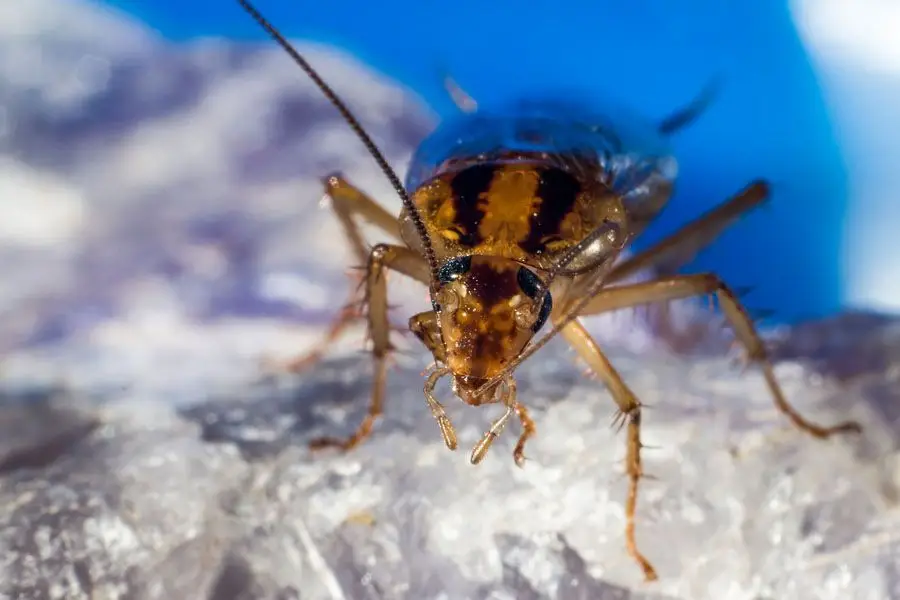
Small cockroaches in the kitchen are one of the most common problems in homes and apartments, especially when it comes to the German cockroach or Blattella germanica, a highly resistant species that is difficult to eliminate without proper treatment.
This small species is very common in household kitchens, hotels, and restaurants, and can appear at any time of the year, even in seemingly clean homes.
Its extremely resilient biology allows it to survive up to 45 days without food and 15 days without water, making it one of the most persistent household pests. In addition, it is an omnivorous insect that feeds on food remains, contaminating surfaces and food, posing a risk to human health.
At Plaguinsa, we address the problem of finding small cockroaches in the kitchen, explaining why they appear, where they hide, and the most effective methods to eliminate them safely and permanently.
Why do small cockroaches appear in our kitchen?
Small cockroaches in the kitchen establish their reproductive cycle near areas where humans live, as they easily find food, water, and shelter.
It is very common to find small cockroaches in the kitchen because it is an ideal place where food residues and moisture are present—two key factors for their survival.
They are also frequently found in places where food is stored, such as cupboards, pantries, or large storage areas.
Their nocturnal habits make them difficult to detect during the day, and they can create nests in various parts of the kitchen, allowing the infestation to spread quickly.
Behind the refrigerator
Behind the refrigerator is one of the most common places where the German cockroach hides, as it finds optimal temperature and humidity conditions to settle, reproduce, and build nests without being detected.
Inside kitchen cabinets
The interior of kitchen cabinets is a quiet, dark, and protected space where small cockroaches can find food and lay their eggs, allowing a colony to develop quickly.
Tile cracks
The small size of Blattella germanica allows it to deposit eggs inside tile cracks, where they remain protected and help the colony establish itself quickly and become difficult to eliminate.
Electrical outlets
Electrical outlets and wiring systems are another common hiding place, as cockroaches take advantage of any gap or small opening to enter, hide, and reproduce unnoticed.
Inside appliances
The interior of appliances is one of their favorite hiding spots, as it provides warmth, darkness, and safety, making them difficult to eliminate. They can also cause damage or short circuits in coffee makers, ovens, microwaves, and other small appliances.
Why is it so difficult to eliminate small cockroaches?
Although there are cleaning and preventive measures that help reduce their presence, when there is an active German cockroach infestation, household methods are usually insufficient and may even worsen the problem.
Most people who contact Plaguinsa do so because they have used home remedies or low-effectiveness sprays and gels, which in many cases cause the infestation to spread to other areas of the home. In these situations, the most effective solution is to use a professional cockroach treatment, as it allows the colony to be targeted at its resting points and eliminated safely and permanently.
At Plaguinsa, we are committed to treatments that are respectful of both people and the environment. Before visiting a property, we follow specific protocols.
What Does a Professional Treatment for German Cockroaches Involve?
Before carrying out the treatment, we recommend that our clients thoroughly clean the kitchen, removing grease and dirt residues which, although not always visible, serve as food and shelter for cockroaches.
It is essential to avoid the accumulation of dirty dishes and food remains, as the availability of food promotes the survival and reproduction of the infestation.
We also advise sealing cracks in tiles and damaged joints, as these spaces are commonly used as hiding and breeding areas, allowing the infestation to persist.
Application of Eco-Friendly Attractant Bait
The application of insecticidal bait is one of the most effective methods for eliminating the German cockroach (Blattella germanica), as it works progressively and remains undetectable to the colony.
There are bait products available for domestic use, but their effectiveness largely depends on proper placement, since cockroaches only feed in very specific areas close to their hiding spots.
To achieve optimal results, it is highly recommended that the application be carried out by a specialized pest control technician, who has the experience needed to identify the most strategic application points, such as resting areas, common pathways, and hidden infestation sources.
In a professional treatment, a thorough prior inspection is conducted to locate hard-to-access areas where cockroaches hide and establish their nests. Small doses of insecticidal bait are applied in these spots; the closer to resting areas, the more effective it is, as nymphs do not travel far to feed.
The bait is also placed in key areas such as inside furniture, appliances, and near food storage zones, always in a controlled and safe manner.
When the bait is ingested, the insecticide affects the cockroach’s nervous system, leading to its gradual elimination. This effect allows the product to spread within the colony, achieving complete eradication of the infestation source.
This type of treatment stands out for its high effectiveness and low toxicity for people and pets, as long as it is applied correctly.
Biocide Fogging (Only in Severe Infestation Cases)
Biocide fogging is a shock treatment technique used in cases of very high infestations, where other methods alone are not sufficient.
It is not the most common treatment in private homes, as it requires stricter planning and, in many cases, multiple applications to match the hatching cycles of eggs and nymphs.
After application, a safety period of approximately 12 hours must be respected, during which no person or pet should enter the property, ensuring both treatment effectiveness and occupant safety.
This method is usually used as a complementary treatment, combined with bait systems or follow-up control, to achieve complete eradication of the infestation.
Monitoring the Cockroach Infestation
After carrying out a cockroach treatment, it is highly recommended to perform follow-up monitoring to ensure that the colony has been completely eliminated and to detect any residual infestation points.
For this purpose, adhesive traps with pheromones are commonly used. These do not contain insecticide and serve solely as a monitoring tool.
These traps allow you to:
- detect possible surviving cockroaches
- verify the effectiveness of the treatment carried out
- identify active pathways or hiding areas
They should be placed in strategic points in the kitchen, especially near appliances, inside furniture, and in areas where cockroaches tend to move or hide.
In professional treatments, this monitoring phase is part of the standard follow-up, as it helps anticipate any potential reappearance and act preventively before the infestation develops again.
Preventing the Presence of German Cockroaches in the Kitchen
Preventing the appearance of the German cockroach in the kitchen is essential to avoid infestations that are difficult to control. This species is especially resilient and reproduces quickly when it finds food, moisture, and shelter.
Following a series of preventive habits helps significantly reduce the risk of reappearance after a professional treatment.
Recommended Preventive Measures
• Keep the kitchen clean daily, avoiding food residues on countertops, floors, and appliances.
• Do not leave dirty dishes overnight, as this is when cockroaches are most active.
• Store food in airtight containers, especially flour, cereals, and sugary products.
• Take out the trash daily and use bins with tightly fitted lids.
• Check and reduce moisture by fixing water leaks in sinks, dishwashers, or pipes.
• Seal cracks, joints, and gaps in walls, baseboards, and furniture where they may hide.
• Install door and window seals to prevent entry from common areas or outside.
When Should You Call a Professional?
If you notice small cockroaches repeatedly, even after maintaining strict cleanliness, there is most likely an active colony hidden within the home. In these cases, household methods are usually insufficient and may even cause the infestation to spread.
A specialized professional treatment allows the colony to be eliminated at its source, safely, effectively, and long-term.
If you still have doubts or prefer an initial assessment, you can also request an online pest control consultation to evaluate your case and receive personalized recommendations.
